Every year, cancer claims more than 520,000 lives across Sub-Saharan Africa — and without intervention, that number is projected to double to over 1 million annual deaths by 2040 (GLOBOCAN, via The Lancet Oncology Commission for Sub-Saharan Africa). Not all of those deaths came from cancers that were incurable. Many came from cancers that were treatable — until the patient disappeared from the system.
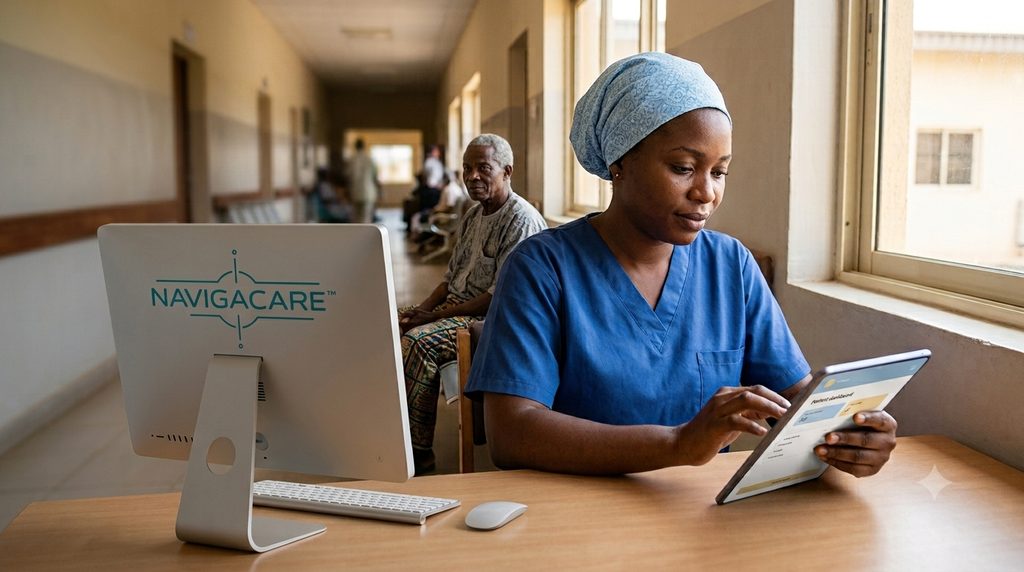
In Nigerian tertiary hospitals, missed-appointment rates for oncology patients run as high as 55%. For low-income families, the cost of transportation to a specialist center often forces a choice between daily survival and a hospital visit. And once a patient walks out the door, most hospitals have no way of knowing whether they ever come back. No one calls. No one follows up. In cancer care, that silence is what turns a treatable diagnosis into a late-stage tragedy.
Why We Built Navigacare
Navigacare traces back to 2024, when its founder and solutions architect saw, through a close family member’s long cancer journey, how much a patient’s outcome depends on staying connected to care between appointments — not just during them. That same year, the City Cancer Challenge Foundation (C/Can) opened a call inviting technology providers, start-ups, and NGOs to build digital health solutions that improve the workflow of cancer patient navigation in low- and middle-income countries (LMICs), as part of a new digital health library meant to surface technologies that were fit for purpose, financially sustainable, and built to last in LMIC cities.
He answered that call, and Navigacare took shape from there — built on one clear premise: no matter what stage a patient is in when they enter care, staying connected through diagnosis, treatment, and follow-up is what gives them the best chance at remission and cure.
Built for the Realities of African Healthcare
Navigacare is listed in the City Cancer Challenge Foundation (C/Can) Digital Health Library, based in Geneva, Switzerland. C/Can’s listing process reviews digital health solutions through a specialized taskforce of experts; of the solutions currently listed, only two sit in the Patient Journey Coordination category, and Navigacare is one of them — built from the ground up for LMIC hospital environments rather than adapted from a system designed elsewhere.
C/Can’s call specifically sought solutions that could ease pressure across both intra-hospital and inter-hospital patient navigation — from a patient’s first point of entry and onboarding, through oncology records, appointment scheduling and reminders, clinical and logistical follow-up communication, patient education, and financial guidance on care costs; to referrals and counter-referrals between facilities, and continuous communication between community-level and tertiary-level care. Navigacare was built to address that full workflow, not just one piece of it.
The platform gives oncology and general hospital teams a digital safety net for the patients most likely to fall through the cracks:
– Automated patient tracking between diagnosis, referral, and follow-up, so no patient’s file goes cold without someone noticing
– Proactive appointment reminders that reach high-risk patients before they miss a visit, directly tackling the missed-appointment rate driving preventable cancer deaths
– AI-assisted clinical guidance, comparing a patient’s journey against similar prior cases — including patients who reached remission — to help care teams decide on next steps
Navigacare doesn’t replace the hospital’s care team. The platform builds and provides the software; it’s the hospital’s own oncology staff who make the calls and keep patients connected. Navigacare’s job is to make sure no patient is forgotten simply because no one had the time to check.
From Concept to Platform
What started as a simple tracking form has grown into two products, both live at app.navigacare.online:
Navigacare Gold is built for oncology and cancer centers, and carries the C/Can accreditation described above.
Navigacare Plus brings the same patient journey coordination to general hospitals and non-oncology care — chronic disease management, maternal and child health, post-surgical recovery, and any care pathway where a missed follow-up can turn into a preventable complication. Cancer isn’t the only condition patients get lost from after diagnosis; a hypertension or diabetes patient who stops showing up for review is just as much at risk, and most general hospitals have no more visibility into that than an oncology ward does. Navigacare Plus gives non-oncology hospitals the same automated tracking and proactive reminder tools, built for the same low-connectivity, resource-constrained settings.
Hospitals can trial either product for 30 days at no upfront cost with additional 14days extension before deciding whether it earns a permanent place in their care workflow.
What’s Next for Navigacare
Between early 2027 and mid-2028, Navigacare will roll out new features built to support faster, evidence-based care — including recommendations drawn from established, tested healing and alkaline nutrition protocols, alongside guidance on the latest curative breakthrough medicines and supplements. These additions are planned for both Navigacare Gold (oncology) and Navigacare Plus (general hospitals), extending the platform beyond tracking and reminders into actively supporting how care teams guide patients toward recovery.
Help Us Close the Gap
We’re currently raising funds to give upcoming hospital pilots a full four months to run — the runway care teams need to actually prove that consistent follow-up changes patient outcomes — instead of the standard 30-day trial. This campaign closes as soon as it reaches its goal, so every gift moves that date closer.
We don’t reach patients directly — Navigacare’s software is deployed to hospitals and care centers, and it’s their own staff who use it to reach their patients. The more hospitals we’re able to onboard, the more patients are indirectly reached, and the more the gap in patient journey coordination closes. Every gift goes directly toward getting this platform into more hospitals’ hands:
– ₦5,000 – ₦100,000 helps us onboard more hospitals and care centers, extending patient journey coordination to more patients indirectly
– ₦542,321 covers one full month of Navigacare Gold (2 seats included) for one hospital — giving an entire oncology team the tools to reach at-risk patients before they miss a visit
– ₦338,441 covers one full month of Navigacare Plus (2 seats included) for one hospital — giving a general hospital’s care team the same tools to reach at-risk non-oncology patients before they miss a visit
Full pricing, including additional-seat rates, is available on the pricing page at app.navigacare.online.
* Donate in Naira (paystack)→
* Donate in USD or other currency (flutterwave)→
Prefer a bank transfer? Contact us and select “General Enquiry” to request our account details.
Preventable care abandonment is costing lives every day. Navigacare was built to make sure that once someone reaches a hospital, the system never lets go of them — keeping every patient, oncology or general, on a connected path toward remission, recovery, and lasting wellness, powered by our super intelligent AI feature.
Leave a Reply